
 CBD topical
Find Your Comfort: Topical Blends for Daily Soreness Support
J
James Garman, Founder

In this article
From ancient Chinese remedies to 2024–2025 clinical research, this guide explains how non‑intoxicating CBD and CBG work on the skin via the endocannabinoid system. Learn CB1/CB2 basics, why topicals act locally, and how formulation, stability, and quality testing matter—plus emerging evidence that CBD+CBG combinations may support skin barrier function and comfort
We believe in empowering your active life. Our botanists meticulously craft topical solutions designed to work with your body, offering targeted support for daily comfort and a renewed sense of well-being. Explore how our unique blends help you bounce back.
Find Your Comfort: Topical Blends for Daily Soreness Support Kannaco: Topical Comfort for Daily Life Discover how our expertly crafted topical blends bring everyday comfort. We believe in supporting your daily well-being naturally. Our botanists carefully select ingredients like CBD and CBG, combining them to create topical solutions designed to help you move freely and feel your best. This guide explores how these plant-powered compounds work with your body, focusing on how our unique formulations deliver targeted support right where you need it. Learn about the science behind our soothing creams and roll-ons, and why quality and thoughtful ingredient combinations are key to your comfort. Explore Our Topical Solutions
Our botanists carefully select floral hemp plant varieties to extract Cannabidiol (CBD) and Cannabigerol (CBG). These non-psychoactive compounds are key to our topical blends, offering targeted support for your daily comfort and recovery.
Our botanists craft each topical blend, combining CBD and CBG to support your body's natural systems. We detail how these key ingredients work together, offering targeted relief for daily discomfort and active recovery. Discover the science behind our formulas and how they enhance your well-being.
Key Takeaways
- 1 Clinical Evidence Validates Historical Use: Modern research confirms the therapeutic potential of topically applied CBD and CBG that ancient Chinese physicians documented over 4,700 years ago, with recent 2024-2025 clinical trials showing CBG outperforms CBD in targeting key genes related to collagen, elastin, and skin hydration.
- 2 Localized Action Without Systemic Effects: Topical CBD and CBG achieve therapeutic concentrations in skin tissue without significant systemic absorption, with studies showing CBD permeation remains extremely low (1.66 × 10⁻⁴% of applied dose) while maintaining effective localized comfort-supporting and barrier-enhancing properties.
- 3 CBD + CBG = Superior Formulation: When combined in topical formulations, CBD and CBG demonstrate enhanced utility through complementary mechanisms—CBD primarily targeting CB2 receptors while CBG interacts with both CB1 and CB2 receptors, creating synergistic benefits that can increase potency up to 6-fold compared to individual cannabinoids.
How Our Botanicals Work with Your Body's Natural Systems
We carefully select premium hemp, cultivated either indoors in biosesupport environments or sun-grown when nature offers its best. Our botanists ensure each plant meets our high standards, yielding non-intoxicating CBD and CBG. We then use precise CO2 extraction, a high-pressure, sub-zero process, to sesupport the pure compounds for our formulas.
The extraction process really depends on the operators and their patience and care when isolating and extracting the different chemical compounds within that specific plant variety and crop. Great operators generally employ a gentler multi-phase process to preserve terpenes, flavonoids, and cannabinoids.
These hemp-derived cannabinoids also known as phytocannabinoids engage and interact with your endocannabinoid system, which plays a natural, automatic, and systemic role in maintaining homeostasis among your body's core operating systems, from peripheral tissue (your organs) to your central nervous system, your ECS (endocannabinoid system) plays a role.
Within your ECS, there are two primary sensors (receptors) that CBD and CBG interact with. The cellular activity modulated from these interactions is synergistic as each cannabinoid yields a slightly different response.
For example, the cannabinoid Delta 9 THC actually binds and sticks to these receptors whereas CBD and CBG work with the receptors to modulate and activate other cellular activity such as increasing production of neurotransmitters or prohibiting the production of counterproductive enzymes and acids.
The receptors are known as CB1 and CB2.
Both receptors are located within and can be found in both your brain and your peripheral tissues. However, CB1 receptors have the highest concentration in the brain and central nervous system, where they influence neurotransmission and mood, while CB2 receptors have a higher concentration in the immune system and peripheral tissues, where they have the potential to engage with discomfort and temporary irritation signals without producing psychoactive effects.
CBD (cannabidiol) is widely studied for its influence on CB2 receptors, which are abundant in the peripheral tissue, skin and immune system.
CBG (cannabigerol) interacts with both CB2 and CB2 receptors broadening the potential for its therapeutic impact. It is often referred to as the “mother of cannabinoids” because many other cannabinoids (including CBD and THC) are derived from its precursor, cannabigerolic acid (CBGA).
Where Ancient Wisdom Meets Modern Research
Remedies with use of CBD and CBG possess deep cultural roots spanning millennia.
According to publication by the national Library of Medicine, titled: "Cannabis in Chinese Medicine: Are some Traditional Indications Referenced in Ancient Literature Related to Cannabinoids?":
The earliest documented medicinal use of cannabinoids dates back to ancient China, where it was first described in the Shen Nung Pen-ts'ao Ching (The Divine Farmer's Materia Medica), a foundational text attributed to Emperor Shen Nung around 2700 BCE. This ancient pharmacopoeia classified the cannabinoids from hemp plants as "superior herbs" and documented its applications for various ailments, including relief from physical discomfort and skin conditions.
Read the full publication here
Ancient Chinese physicians like Sun Simiao (581-683 AD) documented using crushed cannabis leaves to extract juice for support physical discomfort from fractured bones. By 1070 AD, the Song Dynasty's Illustrated Classic of Materia Medica included detailed cannabinoid preparations for physical discomfort.
Modern Cannabinoid Discovery
The modern understanding of individual cannabinoids began taking shape in the mid-20th century. CBD was first isolated by Harvard chemist Roger Adams in 1940, though its complete chemical structure wasn't determined until 1963 by Dr. Raphael Mechoulam and colleagues. CBG was subsequently discovered and isolated by Dr. Raphael Mechoulam and Dr. Yehiel Gaoni in 1964.
The pivotal discovery of the endocannabinoid system revolutionized cannabinoid research. CB1 receptors were first cloned in 1990, followed by CB2 receptors in 1993. This breakthrough revealed why humans possess receptors capable of responding to plant cannabinoids, leading to the identification of endogenous cannabinoids like anandamide in 1992.
The Science of Topical Cannabinoids
Modern research demonstrates that topically applied CBD and CBG bypass first-pass metabolism and interact locally with endocannabinoid system (ECS) receptors in the skin without entering systemic circulation in significant amounts. This localized action makes them ideal for targeted applications.
Citing an article from Dermatology Times titled: "CBD and CBG Ointment Improved Skin in Patients with Atopic Dermatitis"
Recent clinical studies have validated several potential benefits of topical cannabinoids. A 2022 study published in Molecules demonstrated that 0.1% CBG serum significantly reduced swelling and redness in human subjects with contact dermatitis, outperforming placebo support. The study showed CBG returned skin condition to near-baseline levels after just two weeks of application.
The same clinical trial found that CBG-support sites produced statistically significant lower transepidermal water loss (TEWL) values compared to unsupported and placebo sites, demonstrating improved skin barrier function. Gene array analysis using 3D human skin models revealed that CBG outperforms CBD in targeting key genes related to collagen, elastin, and skin hydration.
Research published in 2022 using parallel artificial membrane permeability assays (PAMPA) and Franz cell diffusion studies confirmed CBD's favorable skin permeability profile, with computational predictions showing -Log Kp values of 3.6-5.7 cm/s. CBD demonstrated similar permeability characteristics to known skin-permeable compounds like verapamil and progesterone. Franz cell diffusion studies show CBD reaches detectable levels within 30 minutes of application and maintains steady-state concentrations of 47.6-51.8 μg/mL from 6-12 hours post-application.
Health & Wellness Alignment
Current research supports diverse applications for CBD and CBG in topical formulations. Recent studies have documented effectiveness in support atopic dermatitis, with CBD-infused formulations significantly improving severity scores and reducing pruritus in clinical trials.
Formulation Stability: Studies have shown that CBD solubility can reach 378.4 μg/mL in surfactant Tween 20, with stability maintained at 81% and 70% over 30 days in acidic environments (pH 5-6). This research indicates that maintaining Products at slightly acidic pH levels helps preserve cannabinoid integrity.
Enhanced Delivery Systems: Recent advances include nanoformulated CBD for improved skin penetration and bioavailability, microneedle patches for enhanced transdermal delivery, and specialized hydrogels that demonstrate superior properties.
Clinical safety studies demonstrate that CBG is non-irritating at concentrations up to 3% when tested using 3D human skin equivalents. Multiple clinical trials report minimal adverse effects, supporting the safety profile of topical cannabinoids when properly formulated.
Quality control remains crucial for therapeutic efficacy. Research emphasizes the importance of third-party laboratory testing for cannabinoid content verification, standardized extraction methods such as supercritical CO2 extraction, and appropriate formulation pH (5-6) for optimal stability.
Current Clinical Evidence
A 2024 systematic review identified five ongoing clinical trials evaluating CBD for dermatological applications, including studies on acne vulgaris, atopic dermatitis, and severe pruritus. Preliminary results show promising safety and tolerability profiles across various applications.
Research confirms that topical cannabinoids achieve therapeutic concentrations in skin tissue without significant systemic absorption, making them suitable for localized support while minimizing potential side effects.
CBD and CBG Applications in Topical Products
CBD and CBG represent a convergence of ancient wisdom and modern science in topical therapeutics. Historical documentation spanning over 4,700 years, combined with contemporary clinical research, supports their potential applications in dermatology and skincare. Current evidence from peer-reviewed studies demonstrates comfort-supporting, antioxidant, and skin barrier-enhancing properties, with CBG showing particular promise in recent clinical trials.
As research continues to expand, with multiple clinical trials currently underway, these cannabinoids offer evidence-based, non-intoxicating options for topical therapeutic applications. However, continued clinical investigation and standardized quality control remain essential for maximizing their therapeutic potential.
What is the endocannabinoid system (ECS)?
The endocannabinoid system (ECS) is a complex cell-signaling network that plays a crucial role in maintaining homeostasis throughout the body's core operating systems, from peripheral tissues to the central nervous system. The ECS consists of cannabinoid receptors (primarily CB1 and CB2), endogenous cannabinoids (endocannabinoids) produced naturally by the body, and metabolic enzymes that break down these compounds.
What are CB1 and CB2 receptors and how do they differ?
CB1 and CB2 are G protein-coupled receptors that serve as the primary targets for cannabinoids. CB1 receptors are highly concentrated in the brain and central nervous system, influencing neurotransmission and mood. CB2 receptors have higher concentrations in immune system tissues and peripheral organs, where they have the potential to modulate discomfort and temporary irritation signals without producing psychoactive effects.
What is supercritical CO₂ extraction?
Supercritical CO₂ extraction is an environmentally friendly method that uses carbon dioxide at supercritical conditions (above 31.1°C and 7.4 MPa pressure) to extract cannabinoids from cannabis plant material. This process produces solvent-free extracts, preserves heat-sensitive compounds, and allows for selective extraction of different cannabinoids by adjusting temperature and pressure parameters.
What is transepidermal water loss (TEWL)?
Transepidermal water loss is a measurement of how much water passes through the skin and evaporates from its surface, serving as an indicator of skin barrier function. Lower TEWL values indicate better skin barrier integrity, while higher values suggest compromised barrier function. Clinical studies show that CBG significantly reduces TEWL compared to placebo support.
What does "decarboxylation" mean in hemp processing?
Decarboxylation is a chemical reaction that converts acidic forms of cannabinoids (like CBDA and CBGA) into their neutral, bioactive forms (CBD and CBG). This process involves applying heat over time to remove a carboxyl group, making the cannabinoids more soluble and bioavailable. The conversion rates depend on processing temperature and duration.
What are phytocannabinoids?
Phytocannabinoids are naturally occurring cannabinoid compounds found in cannabis plants, as opposed to endocannabinoids produced by the human body or synthetic cannabinoids created in laboratories. CBD and CBG are examples of non-psychoactive phytocannabinoids that interact with the endocannabinoid system without producing intoxicating effects.
What is meant by "bioavailability" in topical applications?
Bioavailability refers to the proportion of an applied substance that reaches its target tissue. For topical cannabinoids, this means how much CBD or CBG actually penetrates the skin and becomes available for utility at the application site, rather than being absorbed systemically or remaining on the skin surface.
What are terpenes and flavonoids in cannabis extraction?
Terpenes are aromatic compounds that contribute to the scent and potentially therapeutic effects of cannabis, while flavonoids are plant metabolites that may provide antioxidant and comfort-supporting properties. Multi-phase extraction processes aim to preserve these compounds alongside cannabinoids, as they may work synergistically to enhance therapeutic benefits through what's called the "entourage effect".
What is a floral hemp variety?
Floral hemp varieties are cultivars of Cannabis sativa L. specifically bred and grown for their flowers (female buds) to maximize cannabinoid production, particularly CBD, CBG, and other therapeutic compounds. Unlike industrial hemp grown for fiber or seed, floral hemp varieties are cultivated with wide plant spacing (typically 6+ feet apart like Christmas trees) to allow large flowers to develop, and exclusively use feminized seeds to ensure all plants produce cannabinoid-rich female flowers rather than pollen-producing male plants. These varieties require intensive cultivation similar to horticultural crops rather than traditional row crops, with careful monitoring during the 90-120 day growing cycle. The female flowers contain the highest concentrations of cannabinoids like CBD and CBG, which develop significantly as flowers mature, typically reaching peak concentrations at 6-7 weeks post-anthesis (flowering). Floral hemp must maintain THC levels below 0.3% by dry weight to remain legally compliant, distinguishing it from marijuana varieties of the same species.
Can I use CBD and CBG topicals daily?
Yes, many people use them as part of their daily skincare routine. However, it's advisable to start with a small amount to ensure no adverse reactions.
Conclusion
CBD and CBG are promising compounds in the realm of topicals. Understanding their history, science, and applications can help consumers make informed choices. As research continues, these compounds may offer new insights into skin health and wellness.
Disclaimer: These statements have not been evaluated by the Food and Drug Administration. These products are not intended to identify, support, support, or prevent any wellness concern.
```
 Kannaco
About the Author
James Garman, Founder
Content Director, Kannaco Wellness | CBD Formulation & Education Specialist
Editorial Team
Topical Education
James Garman is the Content Director at Kannaco Wellness, specializing in cannabinoid science, topical formulation education, and evidence-based wellness content. With deep expertise in full-spectrum CBD and CBG topical applications, James translates complex formulation science into practical guidance for both consumers and healthcare professionals. His work is informed by Kannaco's clinical partnerships with 500+ licensed practitioners across the United States.
Keep Reading
Related Articles
CBD topical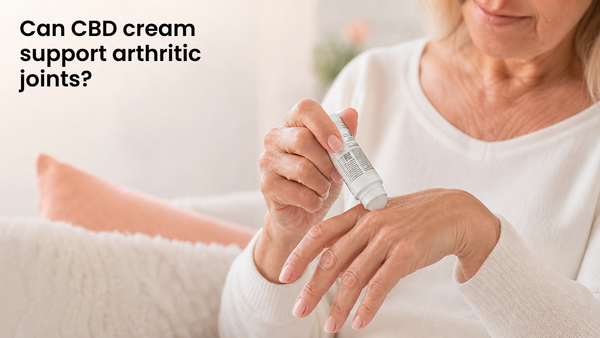 CBD cream
Can CBD Cream Help With Arthritis Discomfort?
James Garman
·
·
5 min
 CBD topical
Can You Use CBD Cream With Other Medications?
James Garman
·
·
4 min
Ready to experience the difference?
Kannaco topicals are formulated with the same cannabinoid science you just read about.
Stay Informed
Get New Articles in Your Inbox
Science-backed wellness content, delivered monthly. No spam, ever.
By subscribing, you agree to our Terms of Service and Privacy Policy.